


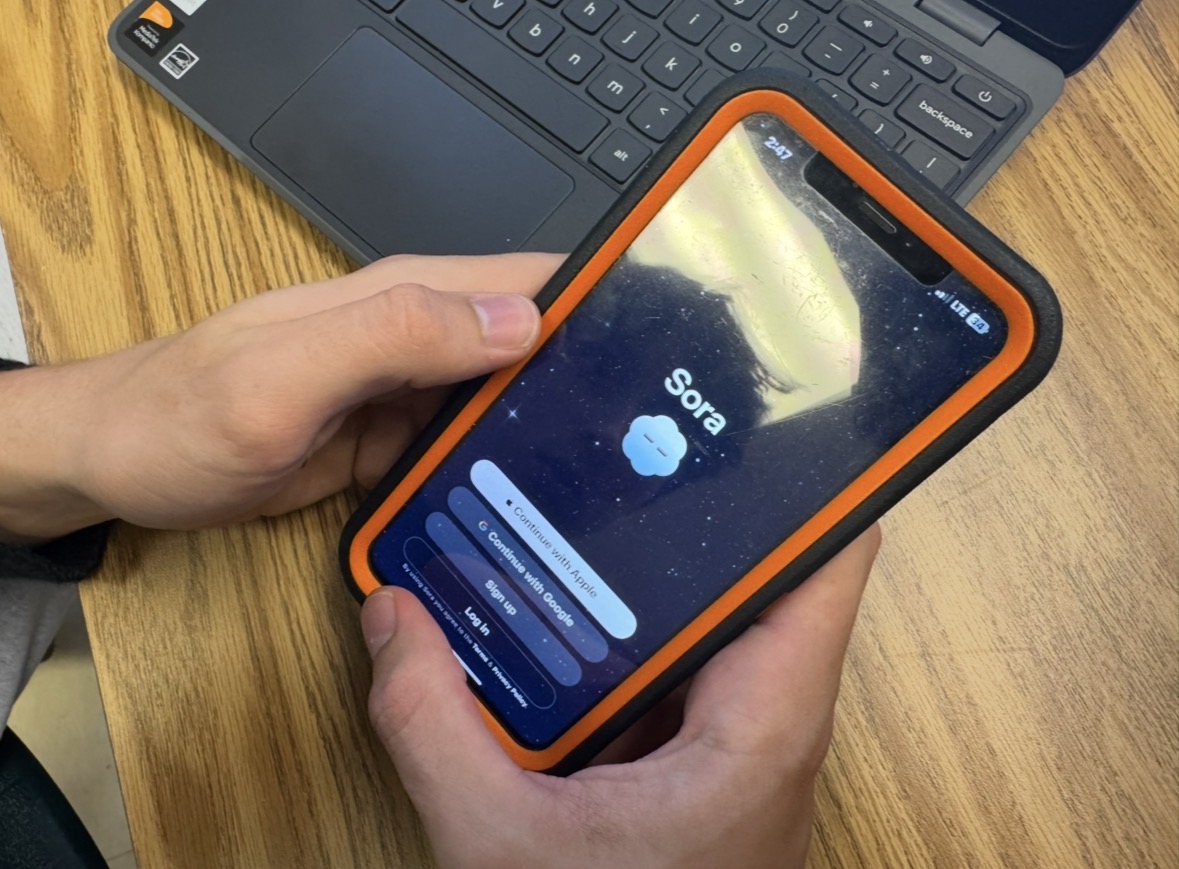
OpenAI released its second iteration of its video model Sora on Sept. 30, 2025, leading to ethical concerns surrounding its replacement of traditional art forms and its use of public figures.
The new model offers more physically accurate and realistic features with synchronized dialogue and sound effects, according to OpenAI’s website.
Videos online have surfaced using Sora across all types of social media platforms, including OpenAI’s own new Sora App.
Clover Hill Senior Carson Hupp shared his experience watching Sora videos.
“It is more for humor. One of my favorites was watching George Washington hit a home run for the Cincinnati Reds,” Hupp said.
Many videos of historical figures have been made using Sora including civil rights activist Martin Luther King Jr. and comedian Robin Williams. The families of both figures have called depictions of the figures disrespectful, leading OpenAI to create restrictions on the celebrities.
Current use of others’ likeness is done through consent on the Sora app but the company has struggled to draw boundaries around celebrity and historical figure use with free speech regulations. The company is largely handling celebrity likeness on a case-by-case basis.
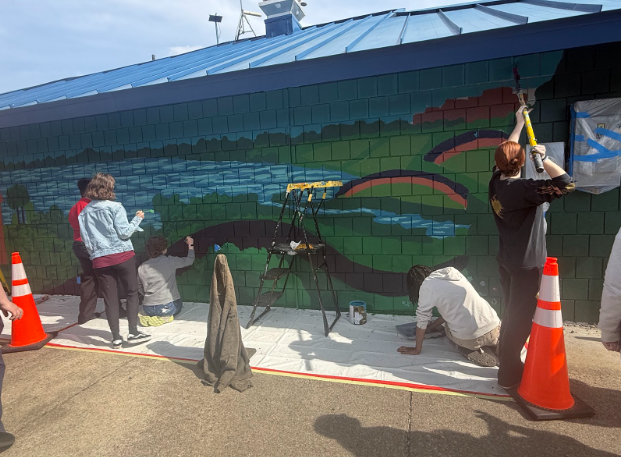
Amanda Berneche, the video and animation teacher at Clover Hill, expressed her views on generative artificial intelligence’s (AI) capabilities and usage in the art industry.
“AI is a problem right now. As an artist, we do not know what the future holds. It is going to get even better and better,” Berneche said.
“It does save time in some realms of art. There are certain tools that can clean up blemishes faster or make it look more realistic. There is always another advancement. Right now, I am teaching dark room, which is not readily available, but now it has become more of an art form and before that it was wet plate and tin types. It is more of an art artifact than anything else,” Berneche said.
Berneche hopes that the population will shy away from AI use and embrace the capabilities of human creation.
“There are a lot of artists right now that are making art based around AI. As an artist we have ideals. We have a social moral code. We are trying to promote something in our art. As an artist, I do not want to make a larger environmental impact with my art. I would rather help it. I’m hoping that the creators that actually create with their hands will reign supreme,” Berneche said.
Generative AI’s future is uncertain and its nature challenges definitions of art and the role of the human experience on arts and entertainment.



Sarah Sath • Feb 4, 2026 at 2:51 pm
AI is ruining the fun in many things. We might not realize it, but some people may rely on using AI to do daily tasks. Using AI for things that we can easily do will make our brain’s critical thinking, memory, and analytical skills weaken due to lack of use. Also, AI is being used for art in making some artists go out of business. The reason for that is because people think it’s easier to use AI instead of paying an artist to create a picture for them. Lastly, using AI to make videos of historical figures offends the family members and supporters of that person. Most of the videos made of them are supposed to be funny and are made as jokes. The family members and supporters of the historical figures don’t think it’s funny to use them for views and engagement.