Bad Bunny’s Super Bowl Halftime Show grabbed the attention of many. While some had conflicting opinions on it, one thing was clear; it showcased the vibrant beauty of a culture built by the Hispanic immigrant community.
Immigrants are faced with, and sometimes forced into, the choice to leave behind family, familiarity, and comfort in pursuit of opportunity. This is not easy. They are entering a whole new world, different from theirs, all while relying on the hope that someday they will achieve the “American Dream.”
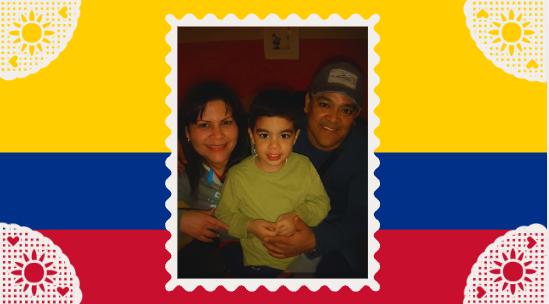
I am proud to say that I am the son of two hard-working immigrant parents. Both my parents immigrated from Barranquilla, Colombia to New Jersey in the mid 2000s. Growing up, I have witnessed them face many hardships, from navigating language barriers to having to adjust to a fast-paced, individualistic culture that contrasts the one they grew up in.
And while I admire all they have accomplished, I often find myself living between two worlds.
At home, my heart speaks in Spanish, though my brain thinks in English. My parents were adamant that I not forget my native language, so while switching between the two is second nature, it can be difficult to express myself at times.
Having grown up in America, I often feel too “American” when around my Colombian family. It can be hard to communicate, or even relate to my family, when the places and culture they were raised in differs from my own.
This is even more difficult when my parents are from a country that is rooted in conservative values, which can make it harder for them to understand someone like me, who is influenced by a very liberal and open-minded approach to thinking.
Besides my family, simply growing up with parents that were immigrants made me stand out from my peers in terms of childhood experiences. My parents have always struggled with speaking English, even to this day. As a child, I would have to go with them everywhere from doctor appointments to the bank to serve as a translator. Besides that, I would also have to sign myself up for school activities or be more aware of things than kids who had more help from their parents. This led me to becoming hyper-independent at a very early age, which is quite common for second-gen kids.
Therefore, I feel a need to strive academically in order to honor my parents and all they have done for me. And though I do also do it for the sake of my own ambition, a part of me feels the heavy weight of guilt if I do not succeed. Growing up, any grade below A was considered a failure in my eyes. As I said before, many immigrant parents see the potential of over-achieving and working hard in a country such as America. They set high, and sometimes unrealistic, expectations for their children, who have the educational opportunities that they did not necessarily grow up with.
Ultimately, living in two worlds is not always comfortable. However, it has taught me how to translate, observe, and adapt to many perspectives aside from my own. I am not “too American” nor “too Colombian,” I am both. In a time where the political climate for immigrants is a harsh one, I have never been prouder of my community and the ones who still work hard, who still believe in themselves, and who still maintain their culture close to their hearts through it all. In its own way, I believe that is the real “American Dream.”
_______________________________________________________________________________
El espectáculo de medio tiempo del Super Bowl de Bad Bunny captó la atención de muchos. Mientras que algunos tenían opiniones contradictorias, algo se hizo bien claro; mostró la belleza de una cultura enriquecida por la comunidad de inmigrantes Hispanos.
Inmigrantes se enfrentan a la decisión, y algunas veces se sienten obligados a tomarla, de dejar atrás sus familias, familiaridad y comodidad en busca de mejores oportunidades. Esto no viene fácil. Entran a un mundo diferente al de ellos, mientras confían en la esperanza que algún día vayan a lograr el “sueño americano.”
Soy orgullosamente el hijo de dos inmigrantes trabajadores. Ambos de mis padres emigraron de Barranquilla, Colombia a Nueva Jersey en los años 2000s. Creciendo, he visto cómo se enfrentaron a muchas dificultades, como navegar barreras idiomáticas y tener que adaptarse a una cultura individualista y de ritmo rápido que contrasta con aquella en la que crecieron.
Y aunque admiro todo lo que han logrado, a veces me siento como si vivo entre dos mundos.
En la casa, mi corazón habla en español, aunque mi mente está en inglés. Mis padres fueron firmes para que no se me olvidara mi lenguaje nativo. Así que, aunque cambiar de un idioma al otro se me hace natural, a veces me cuesta expresarme.
Creciendo en los Estados Unidos, a veces me siento muy “americano” cuando hablo o estoy con mi familia Colombiana. Puede ser difícil comunicarme, o hasta relacionarme con ellos cuando los lugares y cultura en que ellos crecieron con es diferente a la mía.
Esto se hace más complicado con mis padres que vienen de un país arraigado con valores conservador. Esto puede complicar la comprensión de alguien como yo, que está influenciado por un enfoque de pensamiento muy liberal y de mente abierta.
Además de mi familia, simplemente creciendo como el hijo de inmigrantes me destaco de algunos de mis amigos y compañeros. Desde niño, acompañaba a mis padres a sus citas médicas y hasta sus reuniones bancarias para servir como traductor. Además de eso, también tendría que inscribirme en actividades escolares y estar más atento a las cosas que los que recibían más ayuda de sus padres. Como resultado, me volví hiper-independiente a una edad temprana, una experiencia común por niños de segunda-generación.
Por lo tanto, tengo una necesidad de esforzarme académicamente para honrar a mis padres y todo lo que han hecho por mí. Aunque también lo hago por mi propia ambición, parte de mí siente el peso inmenso de culpa si no triunfo. Creciendo, una nota abajo de un 90 era un fracaso en mis ojos. Como dije, muchos padres inmigrantes ven el potencial de sobresalir y trabajar duro en un país como los Estados Unidos. Establecen altas, algunas veces poco realista, expectativas para sus hijos, que tenien las oportunidades académicas que ellos no necesariamente tuvieron.
A fin de cuentas, a vivir en dos mundos no siempre va a ser fácil. Sin embargo, me ha enseñado a traducir, observar, y adaptarme a muchas perspectivas diferentes. No soy muy “americano” o muy “colombiano;” soy los dos. En un tiempo donde la escena política para inmigrantes es intensa, jamas me he sentido más orgulloso de mi comunidad y los que siguen trabajando duro, los que siguen con esperanza, y los que siguen manteniendo su cultura cerca a sus corazones durante todo. En su propia manera, yo creo que eso es el verdadero “sueño americano.”