The phrase “2026 is the new 2016” has made its rounds across social media platforms, with millions of nostalgia filled posts across Instagram and TikTok glorifying the year.
In 2016, people roamed the streets playing Pokemon Go, the Rio Summer Olympics took place, President Obama was closing out his term, Marvel movies dominated the box office, the Chicago Cubs won the World Series for the first time in 108 years, and internet users stood still to Rae Sremmurd’s “Black Beatles” with the Mannequin Challenge.
In 2016, pop hits from artists like The Chainsmokers, Rihanna, The Weeknd, Mike Posner, Justin Bieber, Calvin Harris, Adele, and Ariana Grande dominated the charts.
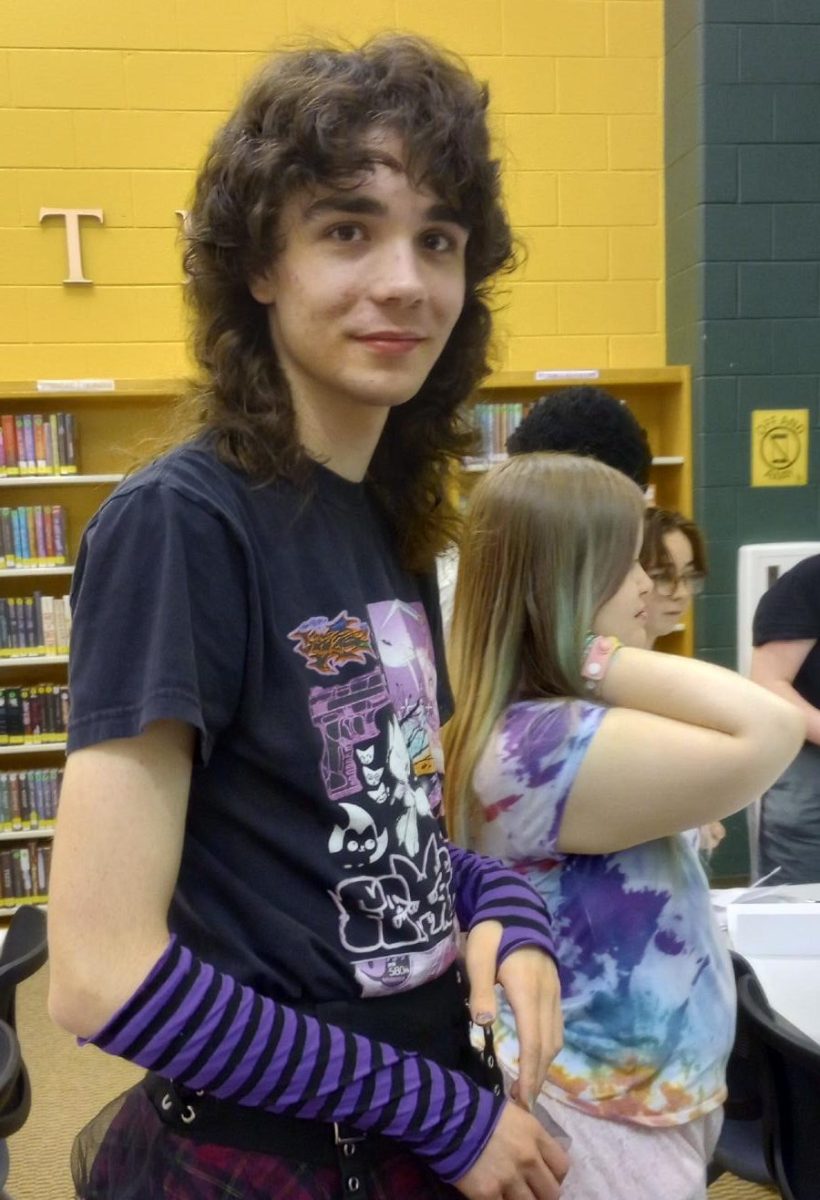
Anna Martinez, a junior at Clover Hill, is still a fan of 2016’s music today.
“I like how there was more pop music,” Martinez said. “People still play a lot of 2016 music today.”
Social media users have posted grainy, 2016 Summer photos with the year’s defining pop songs. Zara Larsson’s 2015 single “Lush Life,” which first entered the Billboard Hot 100 chart in 2016, has particularly surged in popularity. After 10 years, the song now sits at 48 on the Hot 100 and is currently the 12th most popular sound on TikTok.
During 2016, digital streaming platforms had just started to overtake physical distribution, making it easier for musicians to develop their careers online.
The emergence of melodic trap music rooted in Atlanta had characterized the colorful and upbeat rap songs of 2016. Rappers like 21 Savage, Kodak Black, and Lil Uzi Vert defined the new wave of rap music.
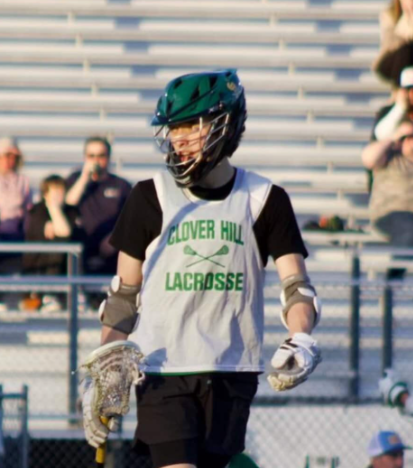
Clover Hill senior William Lohr remembers Post Malone, Young Thug, and Future as some of the most notable rappers of 2016.
“I prefer rap from 2016 … there hasn’t been a lot of great rap music post-2020,” Lohr said.
Lohr’s assessment of rap music is reflected in the charts. During a two week period in late Oct. and early Nov. of 2025, there were no rap songs in the top 40 of Billboard magazine’s Hot 100. This was the first time rap songs were absent since Feb. 1990.
New rap development consists of bass heavy, underground artists who have failed to gain the same level of commercial success as 2016’s hit makers.
The purple-haired, face-tattooed rappers, along with the rising popularity of ripped jeans and Snapchat filters, highlighted the era’s unapologetic attitudes.
“I feel like there weren’t as many judgey people in 2016,” Martinez said. “They could do all of their trends and people were just going with it.”
Desires of a judgement free internet is nothing new. During a period from 2020 to 2022, users online used the phrase “Make Instagram Casual Again,” valuing authenticity as opposed to high effort posts. Relatively recently, the phrase has resurfaced, highlighting the desire for legitimacy in today’s internet culture.
According to a recent Forbes article written by John Brandon, as much as 70% of content on Instagram is AI generated.
When people romanticize 2016, in many ways they are romanticizing a heightened sense of human connection.
In 2020, the global COVID-19 pandemic caused many to stay in their homes, restricting themselves from outside contact. Weakened social contact and economic turmoil of the early 2020s fueled pre-COVID nostalgia as a whole.
History teacher Fahim Rahman believes the deteriorating political climate has also weakened human connection.
“One thing that’s gotten worse is that Americans are very divided now,” Rahman said. “There were divisions in 2016 but I don’t think they were as personal as they’ve become now.”
According to Pew Research Center, Americans overwhelmingly believe that political violence is increasing. Participants on both sides of the political spectrum largely blame the rhetoric and behavior of their opposing party as a major factor of political violence. According to Rahman, 2016 marked the start of these changing political tensions.
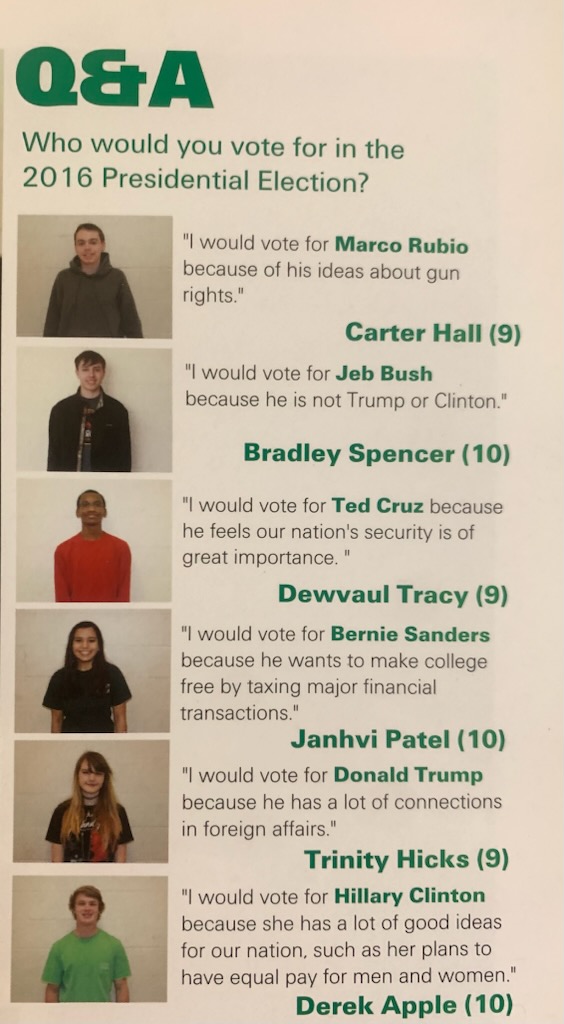
“Regardless of who you supported in the 2016 presidential election, the way that that election went, not the outcome of it, but the process of it, was such a shift from the previous presidential elections,” Rahman said. “You have these figures that are supposed to be role models… they really got into the mud with things.”
Beneath 2016’s vibrant pop culture, there was still intense animosity between the two parties.
It is very possible that people are seeing 2016 through rose tinted glasses. In 2016, Will Lohr was 7 going on 8, Anna Martinez was 6 going on 7, and Fahim Rahman was 17 going on 18. For the youth celebrating the trend, 2016 was a period of childhood.
“When I think of 2016, I don’t just think of the year, I think of the time period in my life,” Lohr said. “2016 itself might not have been the craziest year but I think of that as being a chill time in my life. I only remember the good parts, honestly.”
It is important to realize that 2016 was not without its issues.
“As much as I would love to romanticize it, there definitely were a lot of horrible things going on,” Rahman said.
Rahman also believes that there are some things we have gotten better with as a society.
“There were some issues that needed to be addressed. I think it’s good that since [2016], people have become more conscious of their beliefs,” Rahman said.
If we could learn anything from 2016, it would be to live in the moment, be yourself, and connect with those around you.