



Across America, journalists, especially student journalists, feel as if their voices are being silenced. This, however, is not how it should be, as it contradicts everything America’s founders intended for when establishing the First Amendment in the U.S. Constitution.
Journalism is built on a simple fundamental: holding the power to be able to express a personal opinion or commentary on a topic without facing interference of authority or censorship. It guarantees that the public is informed through a variety of opinions and information, which is important in order to maintain a democratic society. This can especially apply towards student journalists. There is great importance in students being able to express opinions and ideas, as it contributes to an overall school community that fosters a sense of belonging and empowerment within the student body.
If there is one thing many Clover Hill students can confidently say they have learned within their years of taking a social studies class, it would most likely be First Amendment rights. Surprisingly enough though, not many actually know what it entails.
At its core, the First Amendment insures freedoms concerning speech, press, religion, petition, and assembly. In journalism, the two most relevant ones are the freedoms of speech and press. It protects journalists from facing punishment in regards to what they decide to publish, whether it be controversial or uncomfortable. In regards to student journalism, these rights mean that students have the right to publish honest and critical reporting on school issues. The school’s newspaper, the Cavalier Chronicle, thrives on this liberty. For example, without it, this article would not be written.
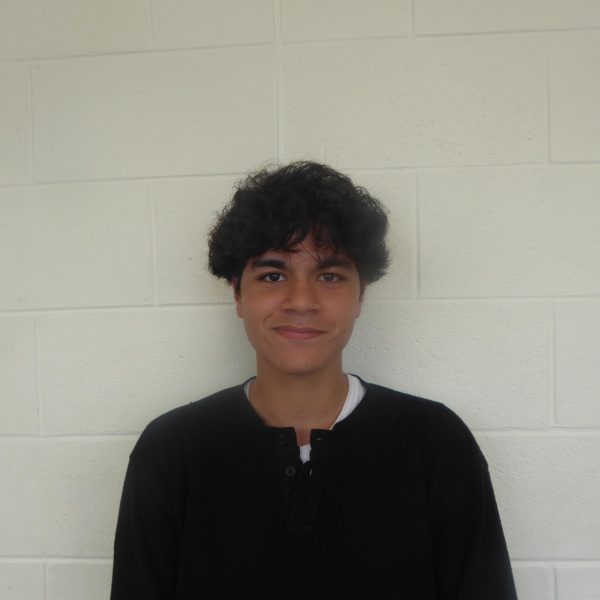
Editor-in-Chief of the Cavalier Chronicle, senior Hazel Lair, illustrates just how necessary these rights are to our school’s paper.
“We have a responsibility to make sure that people are informed about what’s happening around them, so that they can make decisions about how they want to participate in everything we have going on in our world. And just like any other journalistic publication, we need to have our First Amendment rights protected so that we are able to carry out that role,” Lair said.
Though journalists are allowed to report on many issues within the school and district, there are some lines that have to be implemented as to what exactly they can and cannot report in order to not come off as insensitive.
“There are certain things [such as] the government and court cases that we can’t write about. We [the Cavalier Chronicle] answer to Clover Hill High School, which answers to the Chesterfield County School Board, so we do have to be careful about which topics we cover,” Lair said.
However, even though whatever journalists choose to report on has to follow a set of guidelines to not cross a line, it does not mean that they have to be completely radio silent in the way they address important issues.
“If you’re careful about how you do it, you can address certain sensitive topics in ways that aren’t going to upset anybody that you don’t want to upset or break any rules that you don’t want to be breaking,” Lair said.
The Cavalier Chronicle is not the only student publication at Clover Hill High School that is protected by the First Amendment. For example, the school’s award-winning literary magazine, Paths of Clover, depends on being able to write freely. The magazine’s sponsor, English teacher Daniel Waidelich, also believes in the importance of First Amendment rights on student publications.
“[Students] have every right to say what’s on their minds, to express themselves, and sometimes that can be vital. Without an open conversation, we can’t understand who we are, where we are, what problems we have, or we can’t move forward together,” Waidelich said.
As a teacher himself, Waidelich recognizes and offers insight to how sometimes student journalists, or even students as a whole, may not be fully aware of what they can or cannot say.
“There are limits to what you can say. If you said something so offensive that it was going to cause somebody to harm you, or if you were to make a violent threat of some sort, that’s not okay. [Students’] speech starts to get limited when issues of safety come up,” Waidelich says.
While Waidelich recognizes the boundaries of safety set in place for student journalists, he also thinks that those boundaries highlight just how powerful student voices can be. To him, journalism allows students a chance to use that power responsibly, which is to inform and represent their peers.
“Student writers are vital. Teenagers have the biggest emotions. In your whole life, you’re never gonna feel anything as strongly or as desperately as you do as a teenager. Student writers are the ones who feel all those things, and they’re brave enough to write them down and put them out there in the world. They can get past what other people think of them or what their teachers want to hear or what their parents expect of them, and say ‘I have a voice and I’m going to use it,’ and that is brave and heroic, as far as I’m concerned,” Waidelich said.
As a student journalist, I think that it is my role to make sure that my peers are being informed and aware of the going-ons of what is happening around our school. In fact, I think that it is important that students are not just aware of what is happening in school, but also in the community around them. When reflecting on the current status of our country, it can be easy to feel as if journalists, especially student journalists, are walking a fine line between expression and responsibility. But that balance is just what makes journalism so important. When students are trusted to speak honestly, it makes us feel as if our ideas and opinions matter. The First Amendment is not just a principle written onto paper centuries ago. It is what allows us to grow, change, and express ourselves, and as long as student journalists are granted this protection, our voices will never be silenced.

Hazel Lair • Nov 12, 2025 at 1:48 pm
woahh hazel seems pretty cool…..